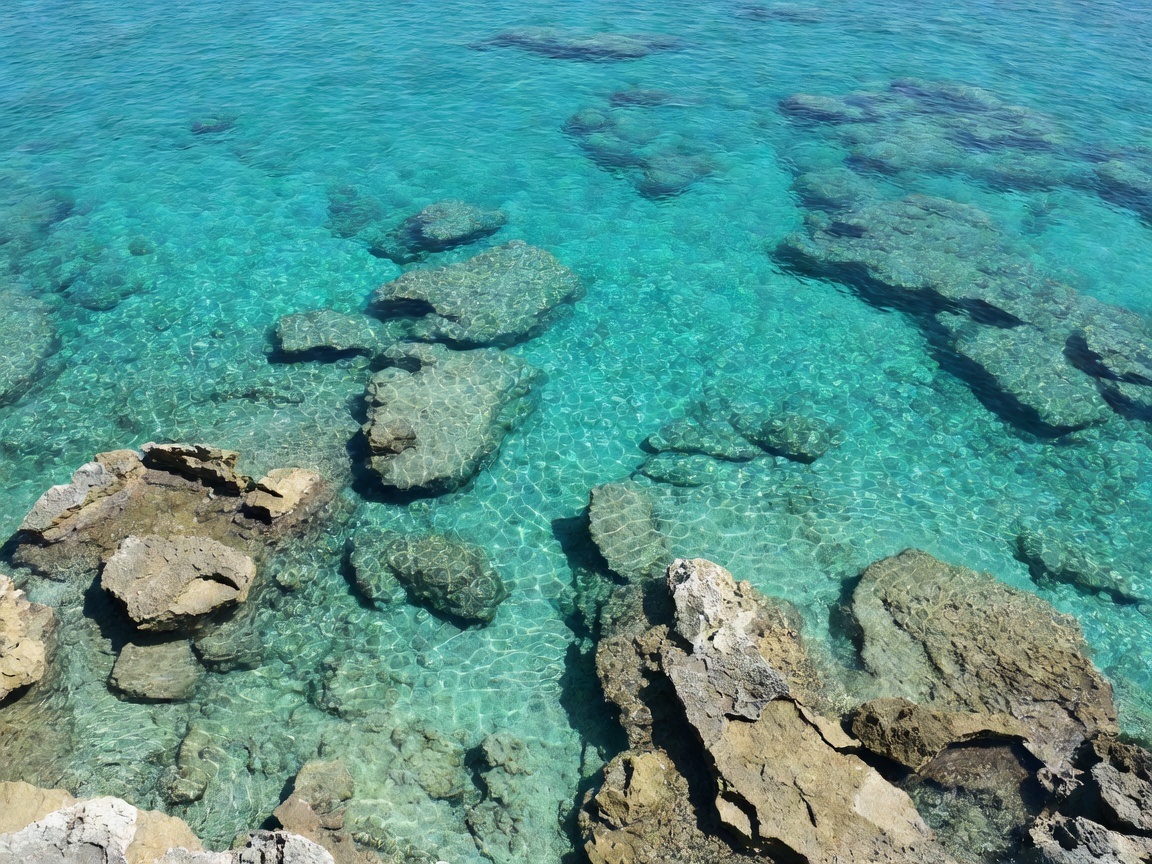
Fteri Beach represents one of the Mediterranean's most striking examples of active coastal karst geology. The beach itself consists of pure white calcarenite pebbles and pulverized marble stones, nestled directly below towering limestone cliffs that rise up to 120 meters above sea level. This geological composition produces water clarity and vivid turquoise hues that consistently rank among the finest across southern Europe.
Geology of the Cove: The White Calcarenite Phenomenon
Unlike the fine golden sand beaches found in southern Kefalonia (such as Xi or Skala), Fteri’s littoral zone is defined by coarse, smoothed white pebbles ranging from pea-sized gravel to grapefruit-sized stones. This pebble matrix is continually replenished by natural cliff weathering and seasonal stormwater torrents rushing through the inland ravine.
Because there is virtually no silt, clay, or fine organic soil in the cove, incoming waves encounter clean mineral gravel. Even when moderate shore breaks develop, the water remains crystalline without sediment clouding. When bright Mediterranean sunbeams penetrate this pristine water column, red and yellow wavelengths are absorbed within the first few meters, while blue and turquoise frequencies scatter violently off the bright white seabed. The resulting optical spectrum gives Fteri its signature electric cyan glow.
Water Depth Profiles and Shore Entry
Swimmers should exercise situational awareness when stepping into the sea. Unlike gently sloping family beaches, Fteri drops off precipitously:
- 0 to 2 Meters from Shore: Ankle to waist-deep pebble shelf with varying stability underfoot.
- 3 to 5 Meters from Shore: Rapid drop-off plunging quickly to 3.5 – 5.0 meters in depth.
- 10+ Meters Out: Ocean floor descends into a vibrant sapphire abyss measuring between 7 and 14 meters deep.
Due to this steep profile, non-swimmers and young children must wear certified flotation aids whenever entering the water. The pebble shelf can shift under bodyweight as backwash pulls toward the open bay, making self-recovery difficult for unconfident swimmers.
Marine Parameters at a Glance
- Summer Water Temperatures: June (22°C / 71°F), July–August (25–26°C / 77–79°F), September–October (23–24°C / 73–75°F).
- Horizontal Underwater Visibility: Regularly exceeds 25 to 35 meters on calm mornings.
- Tidal Amplitude: Negligible (less than 25 cm throughout the lunar cycle).
- Seabed Composition: White marble gravel transitioning to clean sand and offshore limestone reef structures.
Sea Caves, Natural Arches, and Snorkeling
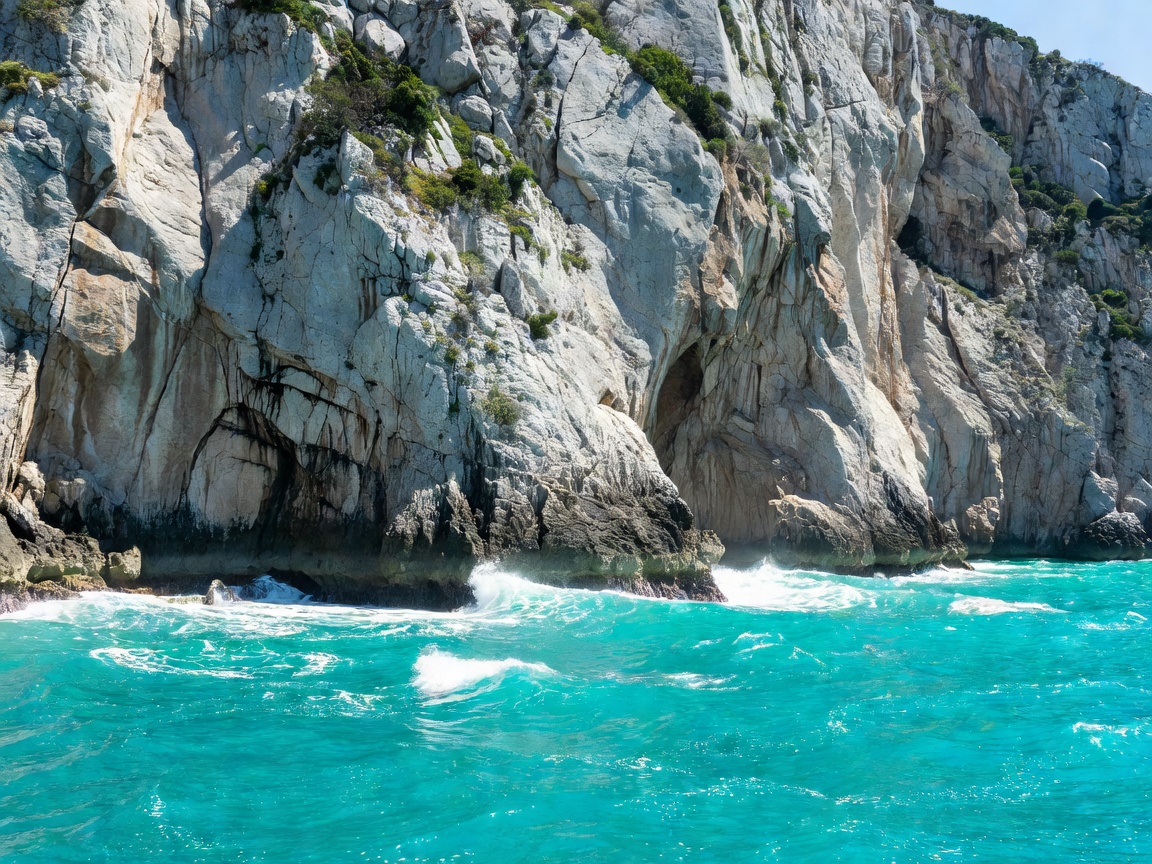
The western flank of Fteri features impressive sea arches and subterranean overhangs carved out by millions of years of marine wave abrasion. Snorkelers will find these rock walls teeming with native Mediterranean marine life:
- Parrotfish & Wrasse: Vibrant Mediterranean parrotfish (Sparisoma cretense) and ornate wrasse feed on algae growing along the sunlit upper margins of the cliff base.
- Damselfish & Sea Bream: Schools of juvenile black damselfish and silver sea bream patrol the mid-water column between the cliffs and the outer reef.
- Sea Urchins: Black sea urchins (Arbacia lixula) congregate on submerged boulders and cave entrances. Wearing protective rubber water shoes is highly advised when exploring rocky shelf edges.
- Octopus: Common octopuses frequently shelter inside horizontal fissures along the underwater cliff foundation.
Afternoon Sea Swells and Wind Considerations
The Ionian Sea is subject to regular diurnal wind cycles, most notably the seasonal north-westerly wind known locally as the Maistros. Typically rising in early afternoon (around 13:30 to 15:00), these winds can push moderate wave sets straight toward the northern mouth of the bay.
While the vertical cliffs provide outstanding shelter from eastern and southerly breezes, northerly winds generate an aggressive shore dump onto Fteri's steep pebble bank. When waves exceed 0.8 meters, exiting the water requires careful timing to avoid being knocked over on the shifting stones. Swimmers should always monitor horizon wave swells and retreat from deep water before conditions deteriorate.
Rockfall & Cliff Base Caution
Kefalonia is an active seismic zone, and coastal limestone cliffs are constantly undergoing thermal expansion and micro-fracturing. Never pitch sun shelters, lay beach towels, or sleep directly beneath the sheer rock faces. Always maintain a minimum safety clearance of 15 to 20 meters from the base of the cliffs to avoid falling fragments or loose gravel dislodged by wild mountain goats roaming the canyon ridge.
Environmental Clarity Protocols
Because Fteri forms a semi-enclosed cove with low water exchange during calm mornings, heavy chemical sunscreen runoff can create unsightly surface slicks and impact delicate marine invertebrates. Visitors are strongly urged to utilize mineral-based, non-nano zinc oxide sunscreens that are certified reef-friendly, ensuring this untouched aquatic ecosystem retains its peerless clarity for generations to come.